Kimberly Person
Jun 18

How Truck Dispatchers Negotiate Higher Freight Rates for Carriers

How Dispatchers Negotiate Higher Rates for Carriers: 7 Proven Strategies 🚛💰
One of the most valuable skills a dispatcher can develop is the ability to negotiate higher freight rates. While many people believe dispatchers simply find loads and assign them to drivers, experienced professionals understand that successful dispatching involves much more than load booking. 📞📋

Knowing how dispatchers negotiate higher rates can mean the difference between a carrier barely covering expenses and a carrier consistently generating profitable revenue.

Whether you're new to the industry or looking to sharpen your skills, these proven strategies can help you maximize earnings for your carriers while building stronger relationships with freight brokers.

🚛 If you're just getting started, be sure to check out our Dispatch Starter Guide to learn the fundamentals of dispatching and freight management.

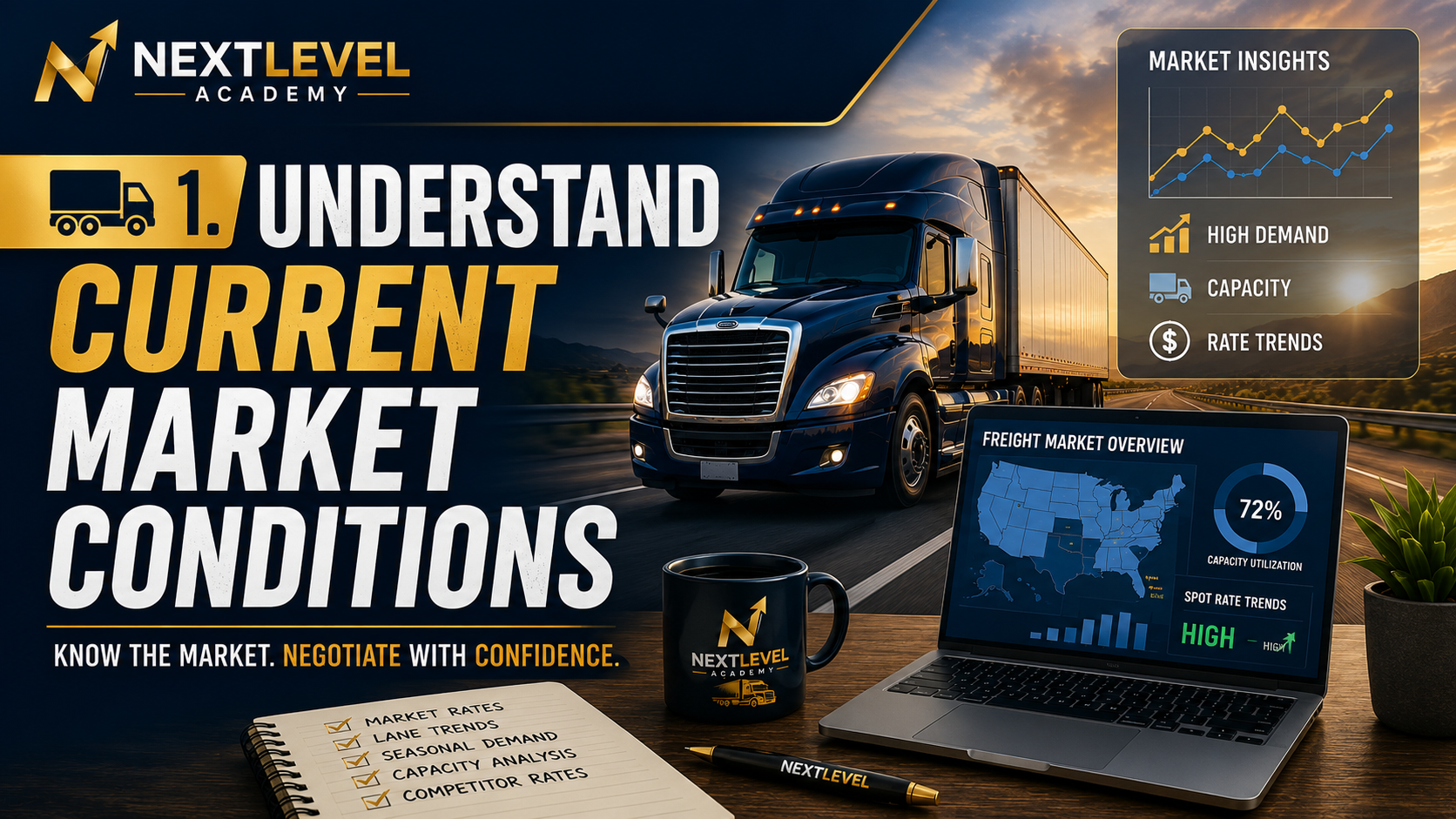
🚛 1. Understand Current Market Conditions
Before attempting any freight rate negotiation, dispatchers must understand the current freight market.


📈 Market conditions affect everything from load availability to broker flexibility. Factors such as fuel prices, seasonal demand, weather events, and equipment shortages all influence freight rates.

Professional dispatchers monitor:

Current spot market trends
Regional freight demand
Lane-specific pricing
Seasonal shipping fluctuations
Fuel cost increases

⭐ Industry Insight: Brokers are more likely to increase rates when capacity is tight and available trucks are limited.

Understanding the market allows dispatchers to enter negotiations with confidence rather than guessing what a load should pay.

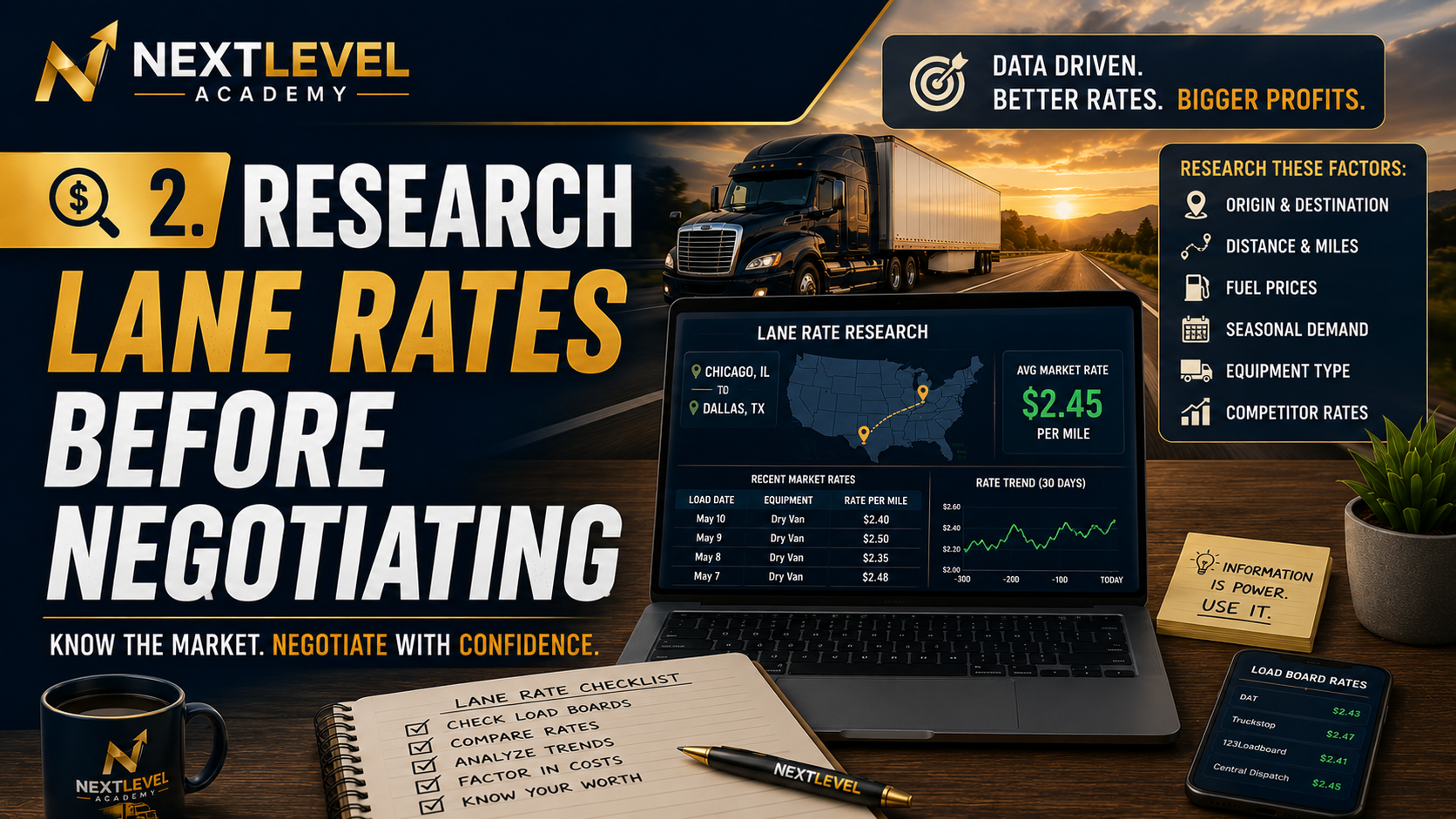
💰 2. Research Lane Rates Before Negotiating

One of the biggest mistakes new dispatchers make is negotiating without data.

Successful dispatchers research lane rates before speaking with brokers. Knowing what similar loads are paying helps establish realistic expectations and strengthens your negotiating position.

🛣️ Before making a call, ask yourself:

What is the average rate for this lane?
Is this a high-demand freight corridor?
Are there alternative loads available?
How urgently does the broker need coverage?

When dispatchers know current lane rates, they can justify their requests with facts rather than opinions.

This is one of the most effective truck dispatcher negotiation tips used by experienced professionals.

📞 3. Build Strong Relationships with Freight Brokers

Many dispatchers focus solely on individual loads. Smart dispatchers focus on relationships.


🤝 Freight brokers often prefer working with dispatchers who consistently:

Communicate professionally
Deliver reliable service
Provide updates when needed
Solve problems quickly
Maintain positive working relationships

Over time, brokers become more willing to offer better-paying freight opportunities to dispatchers they trust.

Relationship-building is often more valuable than aggressive negotiation tactics.

🚚 The best dispatchers understand that today's broker may become tomorrow's long-term business partner.

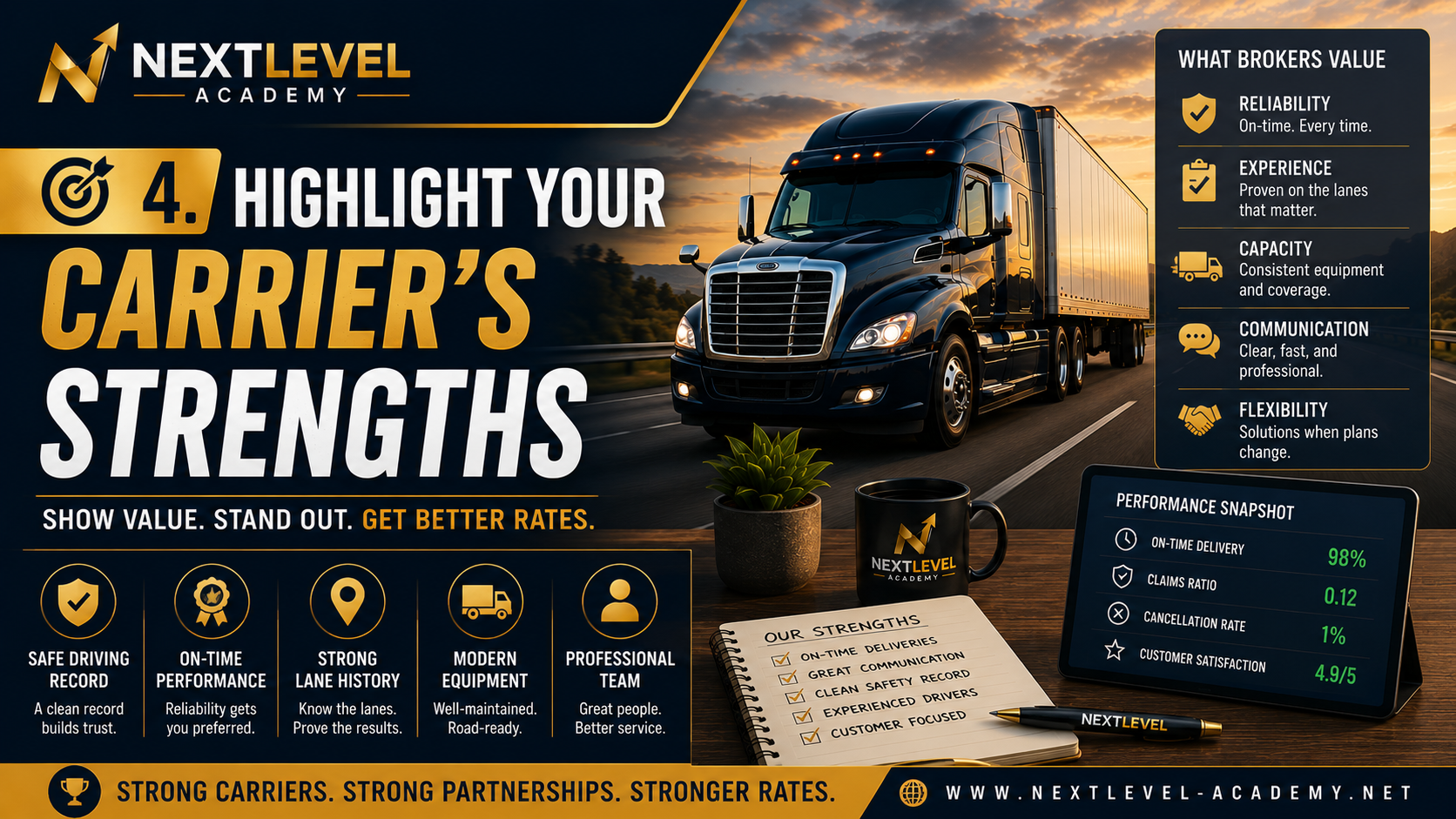
🎯 4. Highlight Your Carrier's Strengths
When negotiating freight rates, dispatchers should emphasize the value their carrier provides.


Examples include:

✅ Excellent safety record

✅ On-time delivery performance

✅ Reliable communication

✅ Specialized equipment

✅ Clean inspections

✅ Flexible scheduling

Brokers are often willing to pay higher rates when they believe the carrier will reduce risk and ensure successful delivery.

💰 Remember: You're not simply asking for more money. You're explaining why your carrier deserves it.

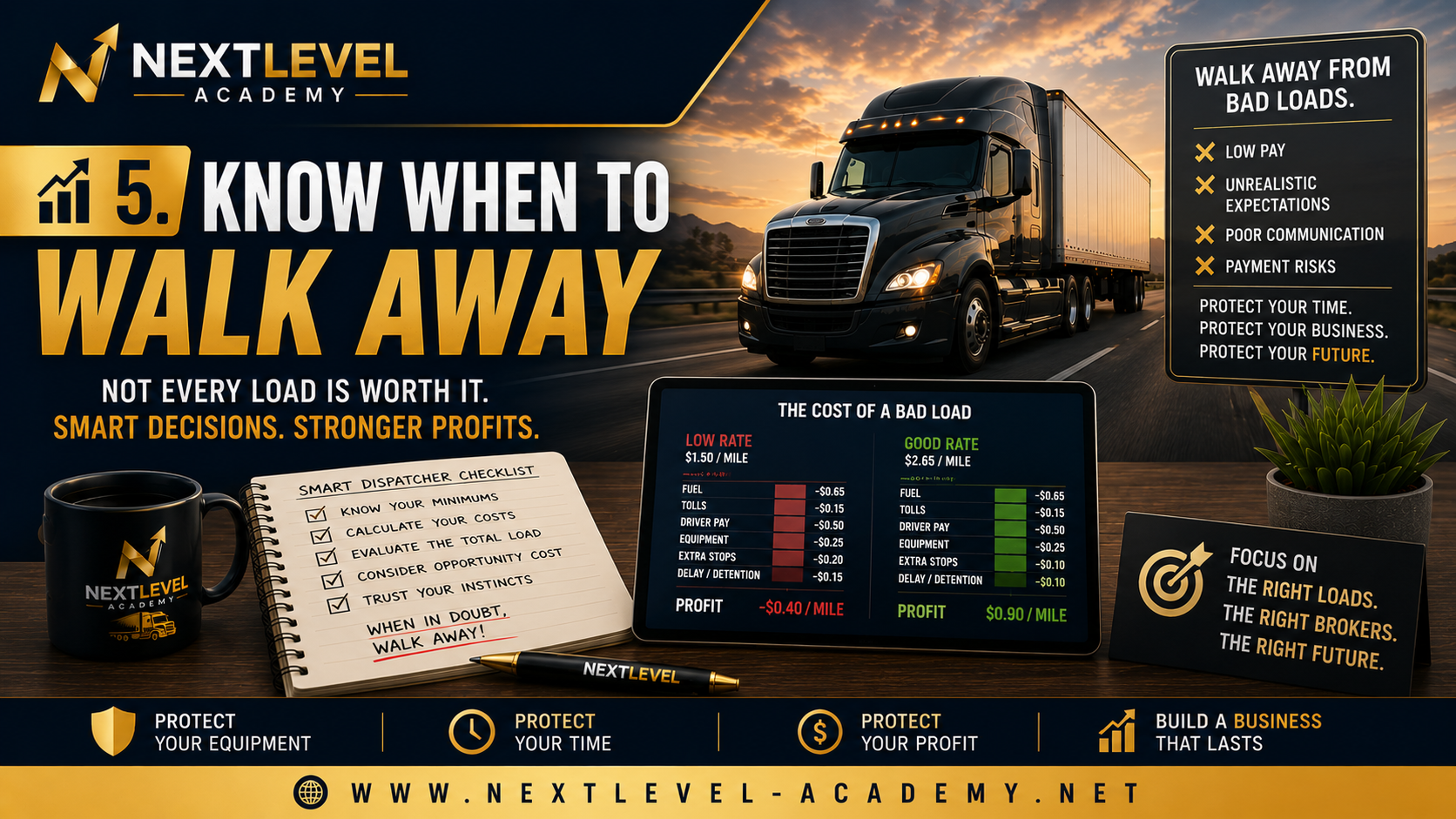
📈 5. Know When to Walk Away


One of the strongest negotiation tools is the willingness to decline a load that doesn't make financial sense.


Many inexperienced dispatchers accept low-paying loads simply because they don't want to lose the opportunity.

Professional dispatchers understand that:

🚛 Not every load is a good load.

Accepting underpriced freight can:

Reduce carrier profitability
Increase driver frustration
Waste valuable operating time
Prevent better opportunities from being accepted

🔥 Pro Tip: Sometimes walking away from a poor-paying load creates room for a better-paying opportunity just around the corner.

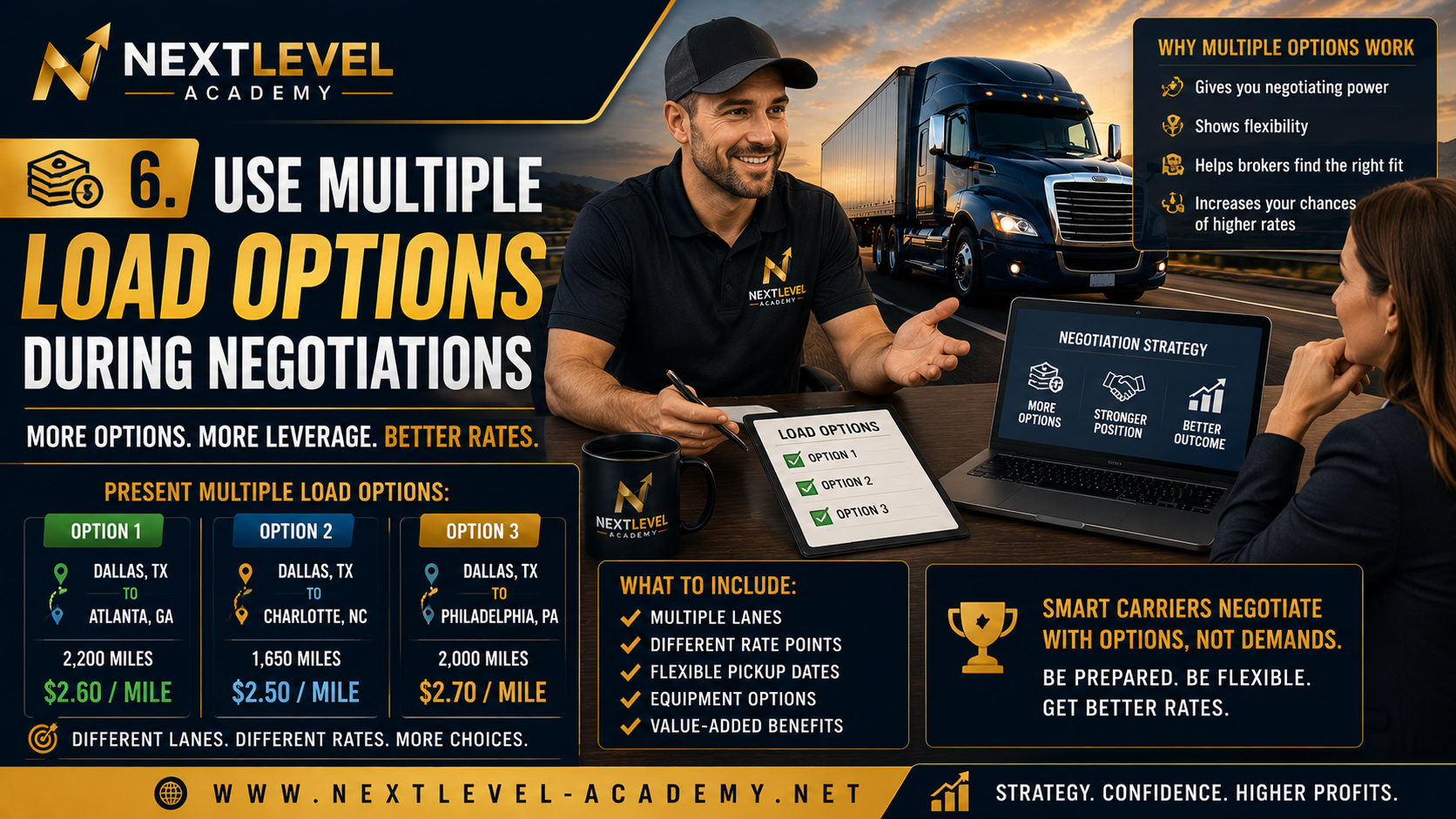
💵 6. Use Multiple Load Options During Negotiations

Experienced dispatchers rarely negotiate from a position of desperation.

Instead, they identify multiple load opportunities before contacting brokers.

When dispatchers have options, they gain leverage.

For example:

Broker A offers $2,200

Broker B offers $2,450

Broker C offers $2,600

Having alternatives allows dispatchers to confidently negotiate higher rates because they know they have backup opportunities available.

This strategy is commonly used by dispatchers who consistently secure higher-paying freight.

🚛 7. Invest in Professional Training


Many people underestimate how much negotiation is a learned skill.

The most successful dispatchers spend time developing:

📞 Communication skills

💰 Freight rate negotiation techniques

📋 Load planning strategies

🤝 Broker relationship management

📈 Revenue optimization methods

If you're serious about learning these skills, our Truck Dispatcher Training Course provides step-by-step instruction on dispatching, rate negotiations, client management, and business growth.

New dispatchers should also download our Free Dispatch Starter Guide to gain a better understanding of industry terminology, dispatching workflows, and daily responsibilities.

🚚 Why Skilled Dispatchers Are in High Demand

As carriers continue looking for ways to increase profitability, skilled dispatchers are becoming more valuable than ever.


Dispatchers who understand:

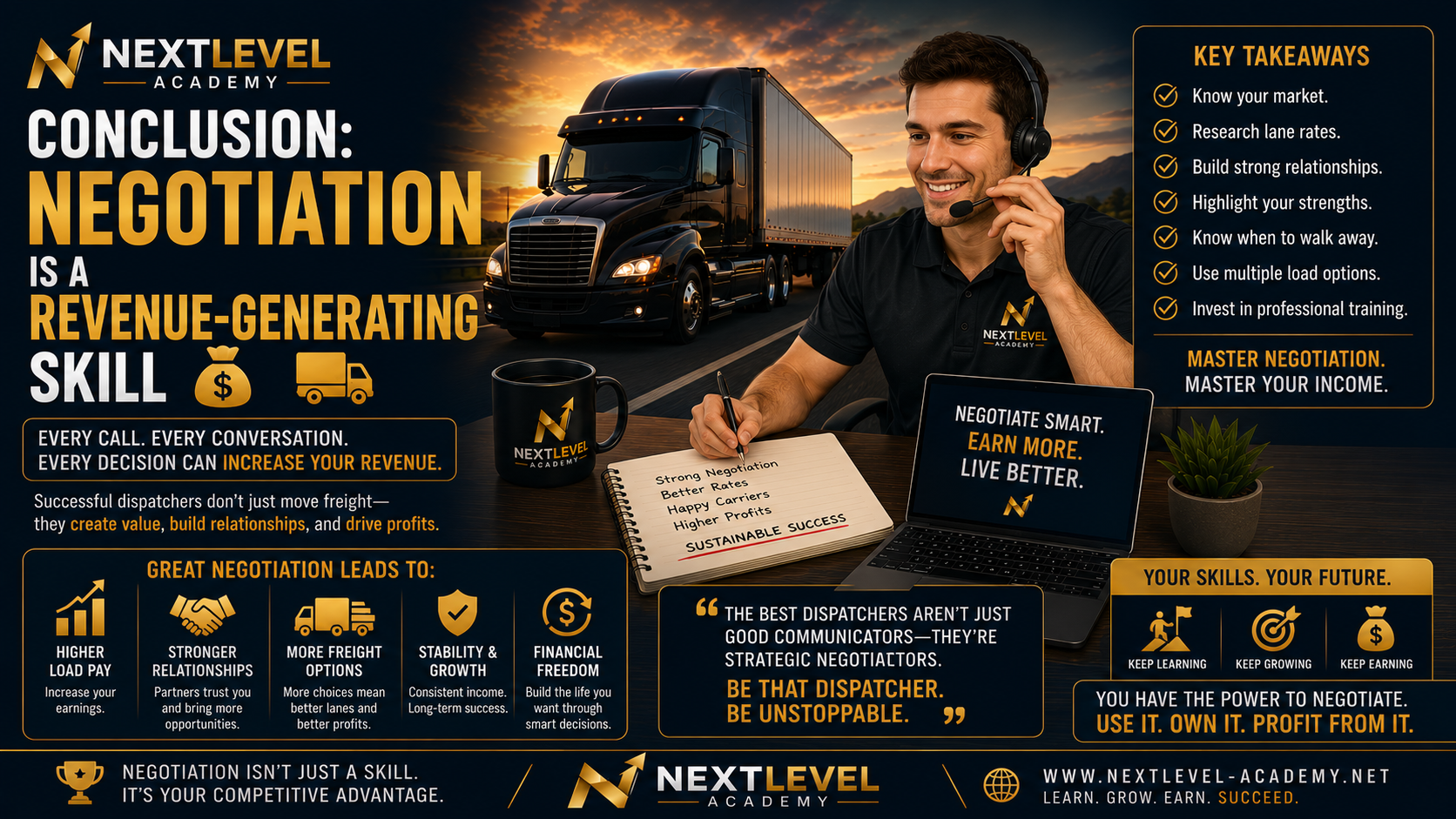
Negotiating freight rates
Building broker relationships
Maximizing revenue
Improving operational efficiency

often create significant value for the carriers they represent.

This is one reason many transportation companies actively seek trained dispatchers through our Direct Hire Opportunities program.

Companies understand that experienced dispatchers can directly impact profitability.

📋 Career Opportunities for Professional Dispatchers


The trucking industry continues to create opportunities for qualified dispatchers.


Whether your goal is to:

🚛 Start your own dispatching business

🚚 Work remotely from home

📈 Build a six-figure dispatching company

🤝 Assist owner-operators with freight management

professional training can help accelerate your progress.

Many graduates begin exploring opportunities through our Dispatcher Job Placement Assistance and Direct Hire Opportunities after completing their training.
Since the emergence of online learning, there has been a discussion on whether online classes are better than traditional classes. There have been competing schools of thought with valid arguments for and against both. In the case of distance learning, it may be most appropriate at colleges and universities. Research data consistently indicate that students strongly prefer distance education. Distance learning allows students to balance their other commitments more effectively, at least in cases they are adult learners, commuters, and part-time students. They don’t believe that they sacrifice a quality education for the convenience of utilizing distance learning. However, both traditional and online learning comes with advantages and disadvantages. When is online learning more convenient than traditional learning? This blogpost indicates the real potential of online learning versus traditional classes.
Created with